Big Bus X Savannah
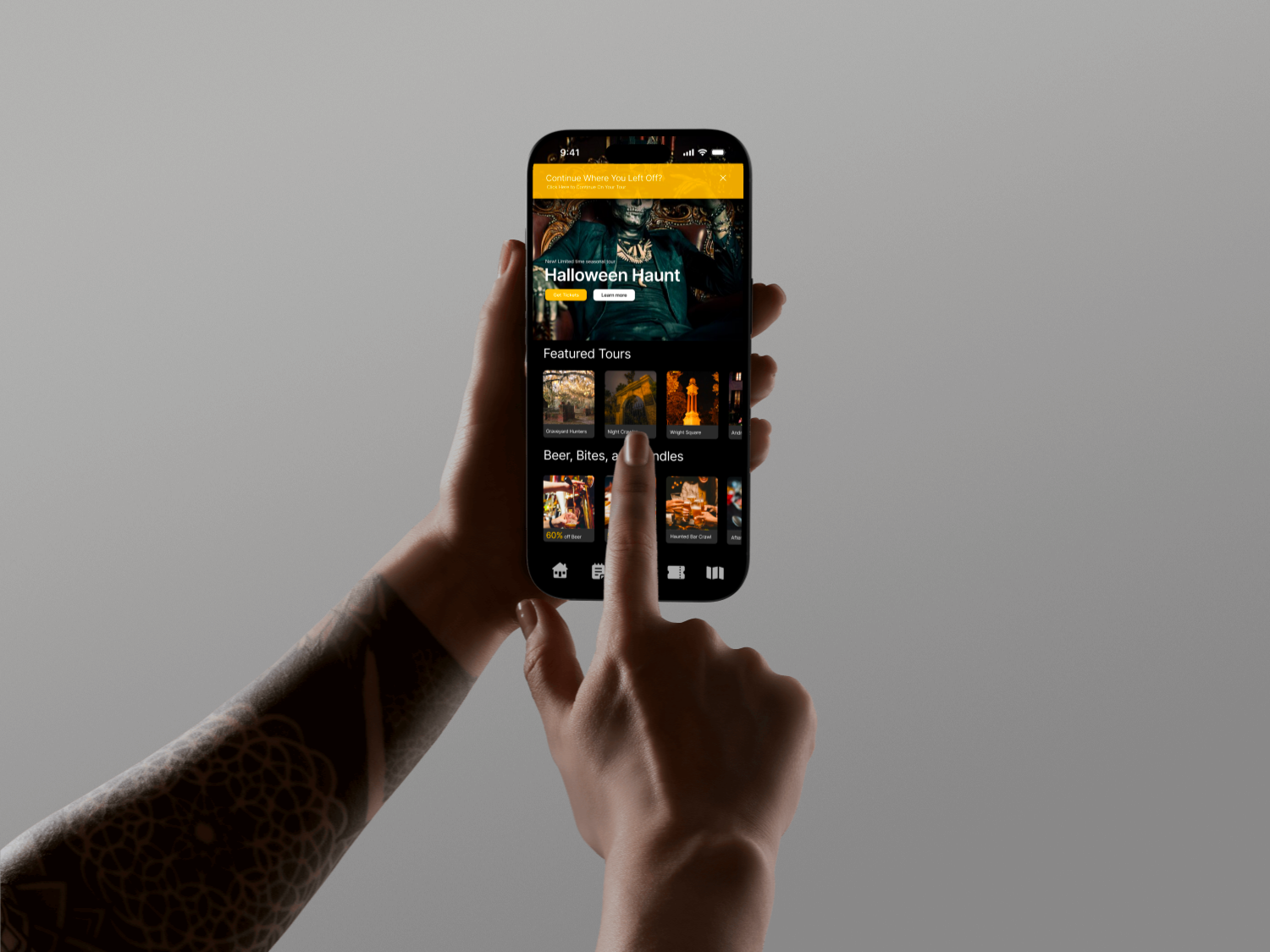
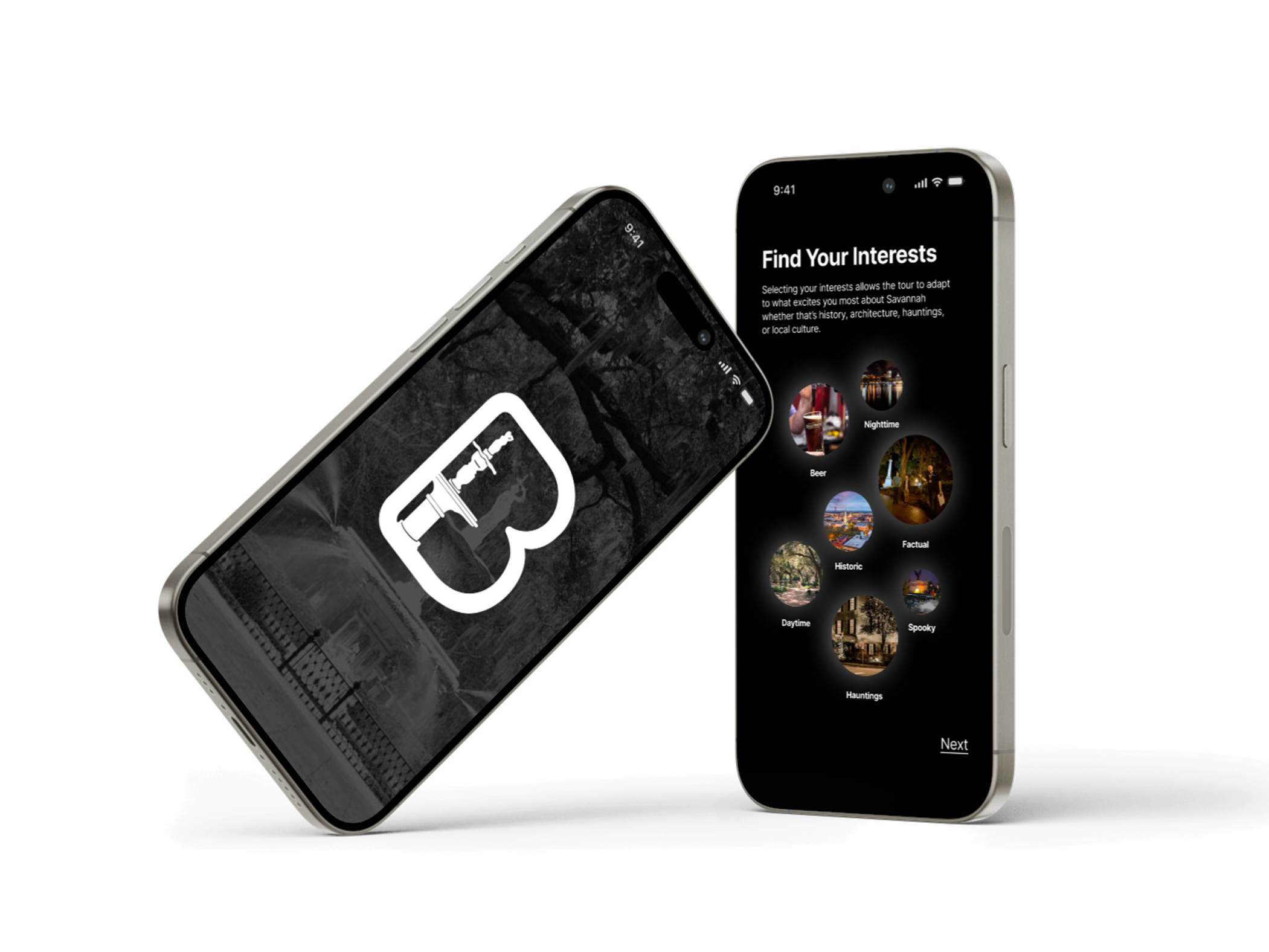
A location-aware augmented reality tour that links Savannah’s streets to layered storytelling, giving visitors a personalized and accessible way to explore the city. Real-time location cues and interactive content bring history and culture to life where it actually happened.
If you want to jump to what excites you:
Why?
Traditional bus tours rely heavily on audio, limiting accessibility and engagement. An AR layer helps make Savannah’s storytelling more inclusive and adaptable to different visitor needs.
Background
Savannah tours rely heavily on audio, creating accessibility challenges in noisy settings and for visitors with hearing or language barriers.
Solution
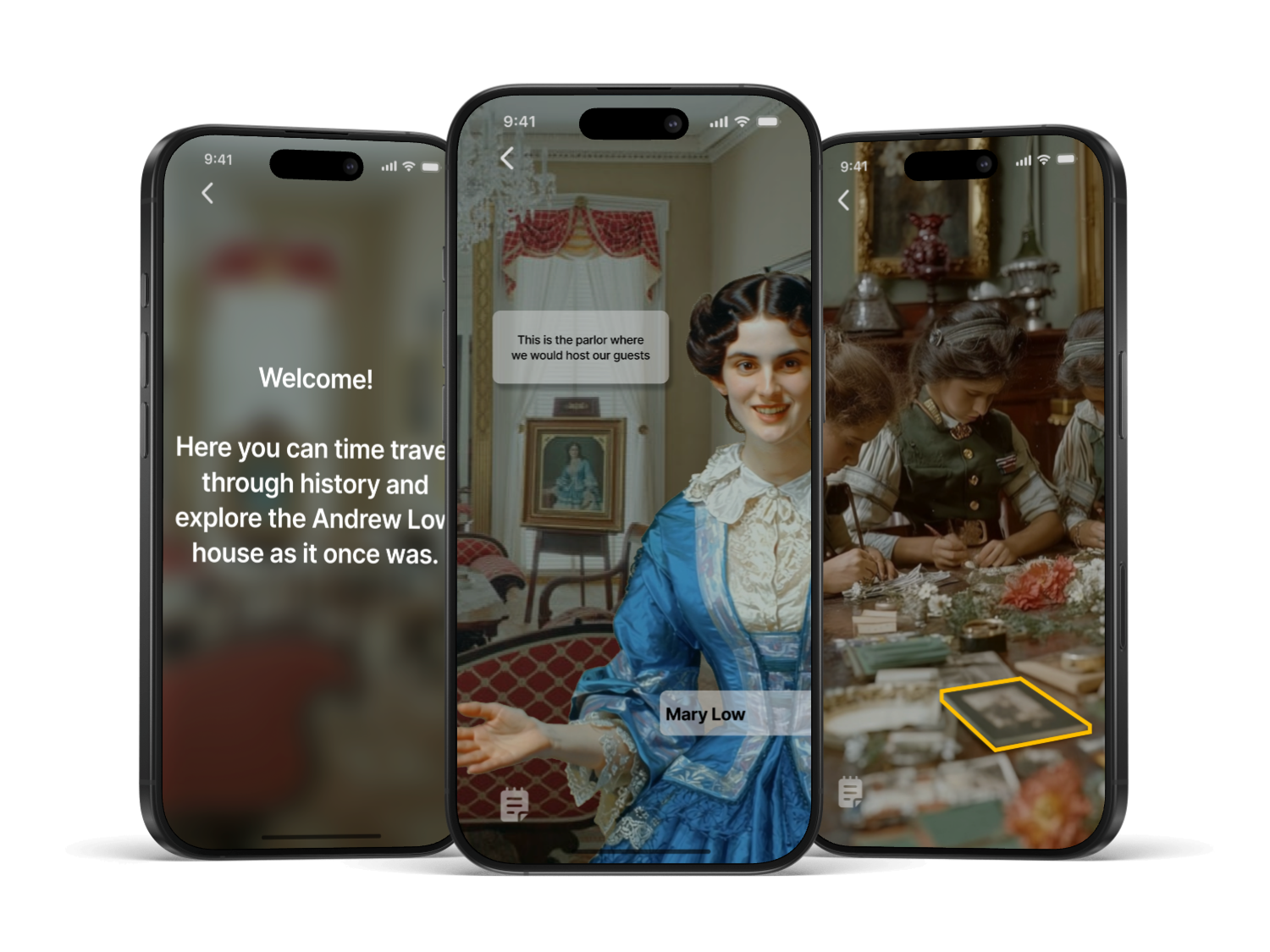
We designed a location-based AR tour that delivers visual and interactive storytelling on users’ phones, reducing reliance on audio narration and enabling a more accessible, self-paced experience.
I contributed to the interface design as part of a collaborative team, focusing on clarity, accessibility, and visual engagement. Together, we shaped the UI direction in Figma and supported one another in applying best practices to create an intuitive, user friendly experience.
Role
UX Designer
Industry
Travel and Tourism
Our Deliverables
UI Design, User Research, Prototyping, Usability Testing, AR Integration
Timeline
One Month
So What Did We Find?
Lets See…
What Were the Insights?
Personalization and accessibility drive engagement
Flexible captions, pacing, and content formats improved accessibility and increased content engagement.
Tours should not be a hard dependency
Providing independent access to content reduced reliance on guides and supported consistent experience delivery.
Freedom enhances enjoyment
Self-paced exploration increased user engagement and time spent interacting with tour content.
What We Did With Those Insights
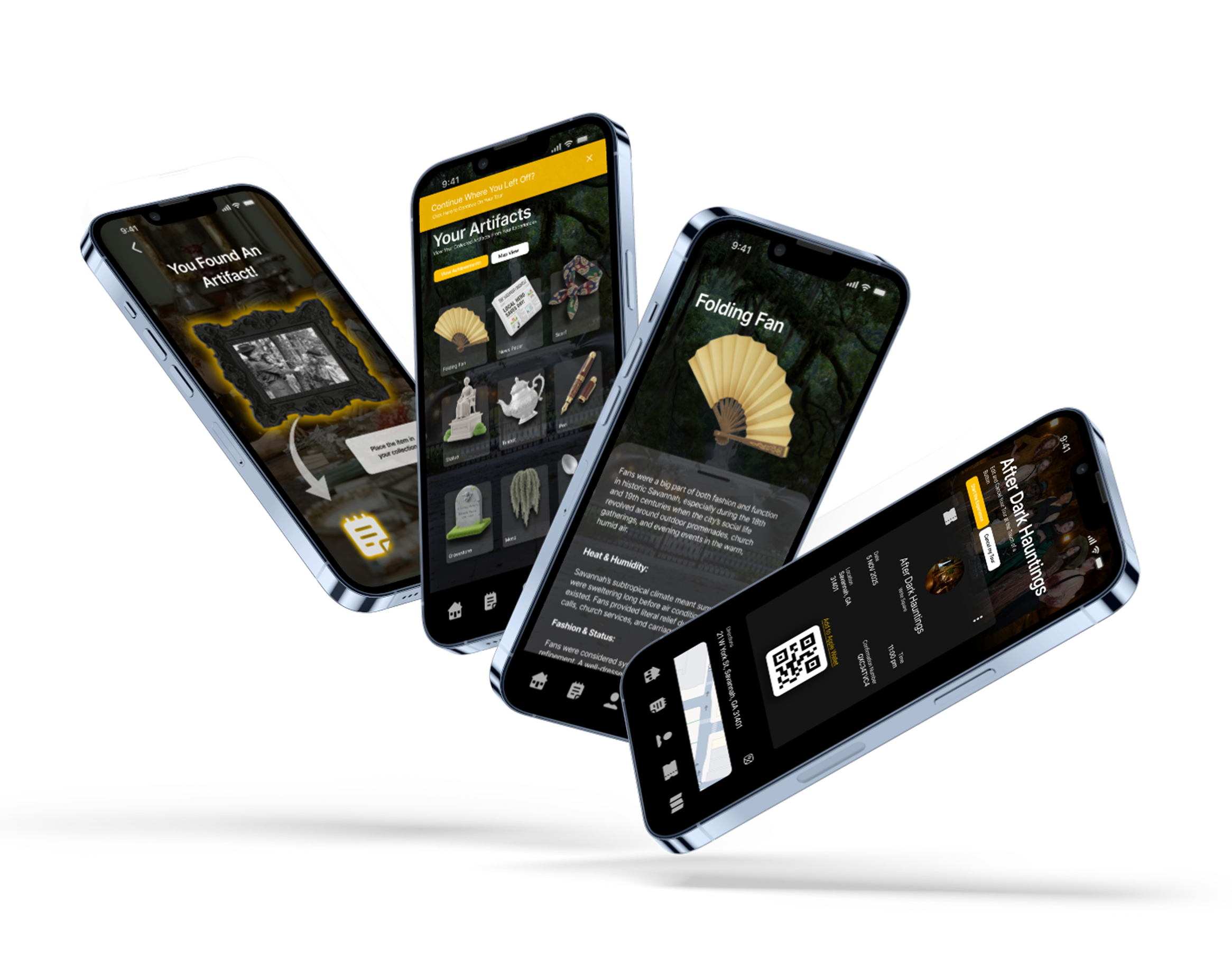
Insights informed two concepts: an AR-enhanced, self-guided experience with light gamification to increase engagement, and a companion mode for live tours that added synchronized captions to improve accessibility and follow-along.
User feedback led us to pivot from a combined trolley and walking model to a focused walking tour experience.
Tours
Critique feedback supported a fully gamified experience that maintains guidance while increasing engagement.
Gamification
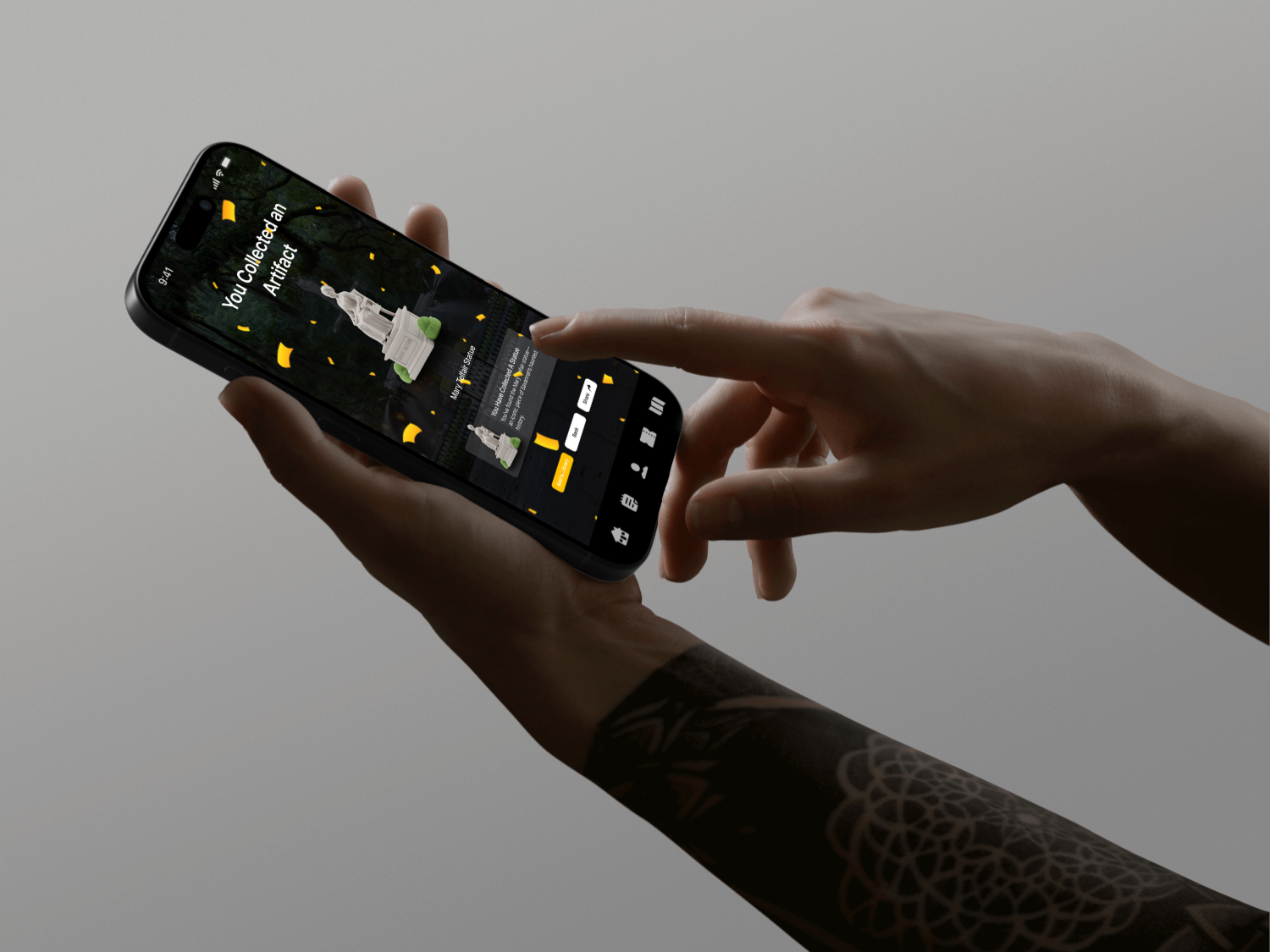
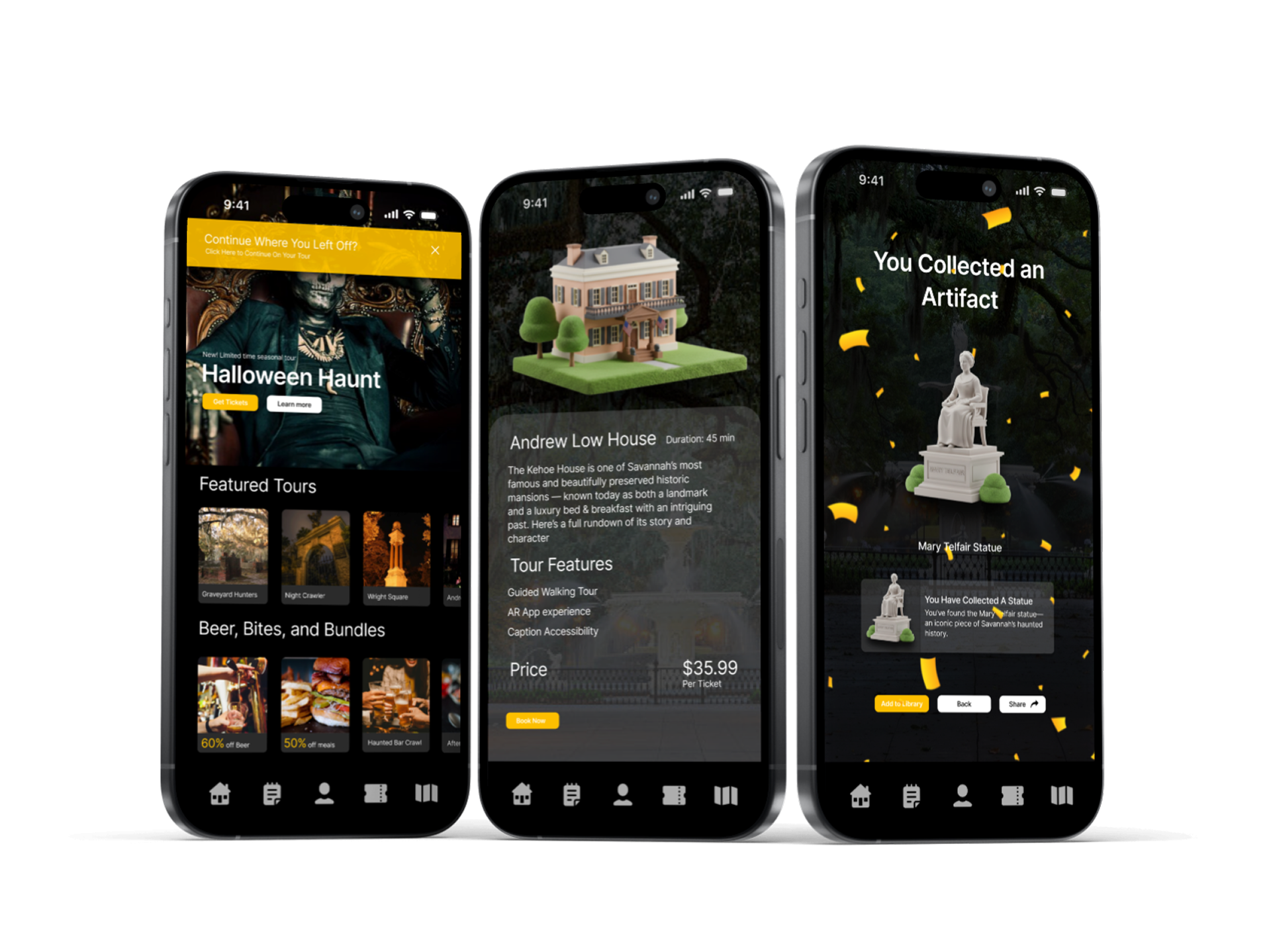
AR-based artifact collection keeps users engaged and allows them to resume the experience at any point, supporting continuous exploration.
Ar Integration
We Followed a Human Experienced Focused Process that Follows from Research to a Polished Solution.
Interviews and Data, From Users For Users.
-
We looked at how people actually experience Savannah tours in the wild. Between traffic, crowds, and weather, a lot of storytelling gets lost. Talking with tourists made it clear that audio-only tours just do not work for everyone.
Tourism experiences are becoming more digital, but accessibility has not kept pace. Busy cities, larger tour groups, and audio-heavy storytelling leave many visitors behind. As travelers increasingly expect flexible, self-guided experiences, AR creates an opportunity to make tours clearer, more inclusive, and easier to follow without changing how tours already operate.
-
Patterns started to pop up fast. Accessibility challenges affected way more people than expected, not just older visitors. We narrowed in on one big takeaway: tours need visual, flexible storytelling that works no matter the environment.
To understand real tour conditions and visitor needs, we combined observational research with interviews and secondary research on accessibility and tourism trends. We analyzed recurring patterns around noise, pacing, and engagement to identify gaps in the current tour experience and pinpoint where AR could add value without adding friction.
-
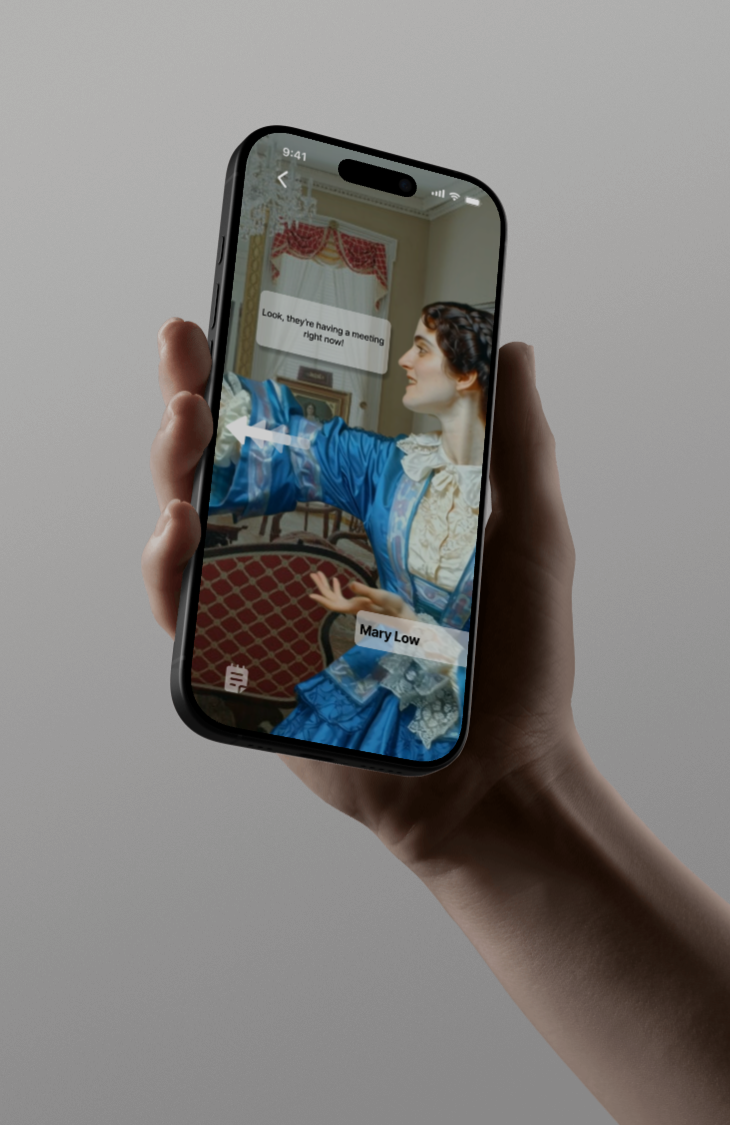
This is where things got fun. We brainstormed ways to bring stories off the speaker and onto the city itself. AR stood out as the best way to layer captions, visuals, and moments of interaction right where they matter.
-
We kept the experience simple. Scan a spot, unlock the story, keep moving. The goal was to guide users without pulling their attention away from Savannah.
-
We designed quick, lightweight AR interactions that are easy to read on the go. Everything focused on clarity, legibility, and not making tourists feel like they are stuck in an app.
-
We tested early, adjusted often, and kept refining based on real feedback. Each round made the experience smoother, faster, and more intuitive for busy tour days.
Impact
Research showed that audio-first tours limited accessibility and engagement, so the AR-enhanced experience reduced reliance on narration and enabled self-paced, visual storytelling that helped more visitors meaningfully engage with Savannah’s history.
75% of users reported feeling more confident navigating the tour and choosing their next stop.
Reduced onboarding time from 2 minutes to under 1 minute through contextual on-screen guidance.
Users explored 2× more points of interest with location-aware AR guidance.
AR / AI Guided Decision Support
AR and AI–guided decision support provides contextual prompts and visual cues that help visitors navigate the tour, choose where to explore next, and stay oriented without relying on live narration.
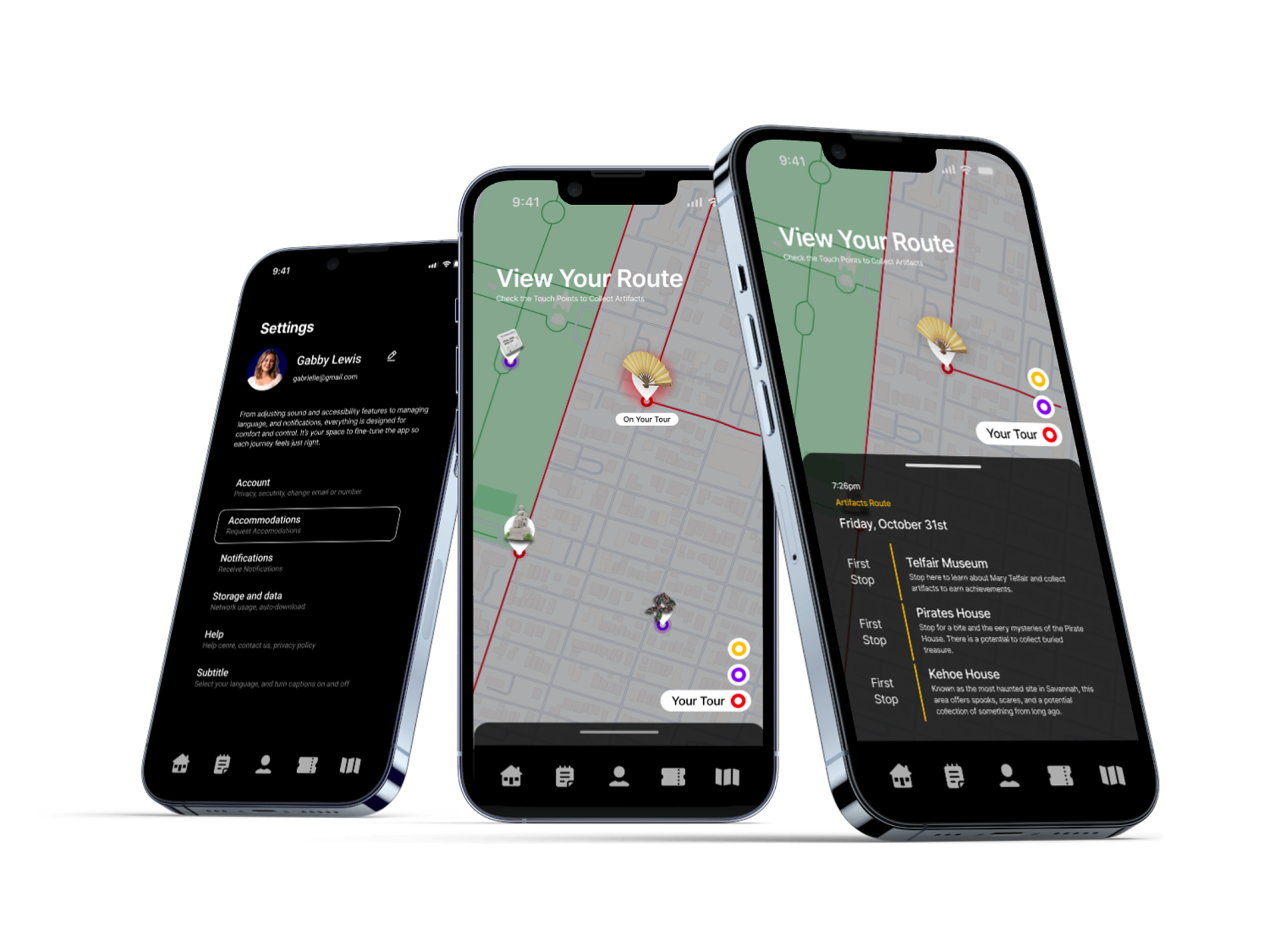
Our Final Concept
A hybrid guided experience uses AR, on-screen storytelling, and gamification to create an adaptive, accessible Savannah tour with optional audio and language selection.