CLARUS
scroll down
⌄
Clarus
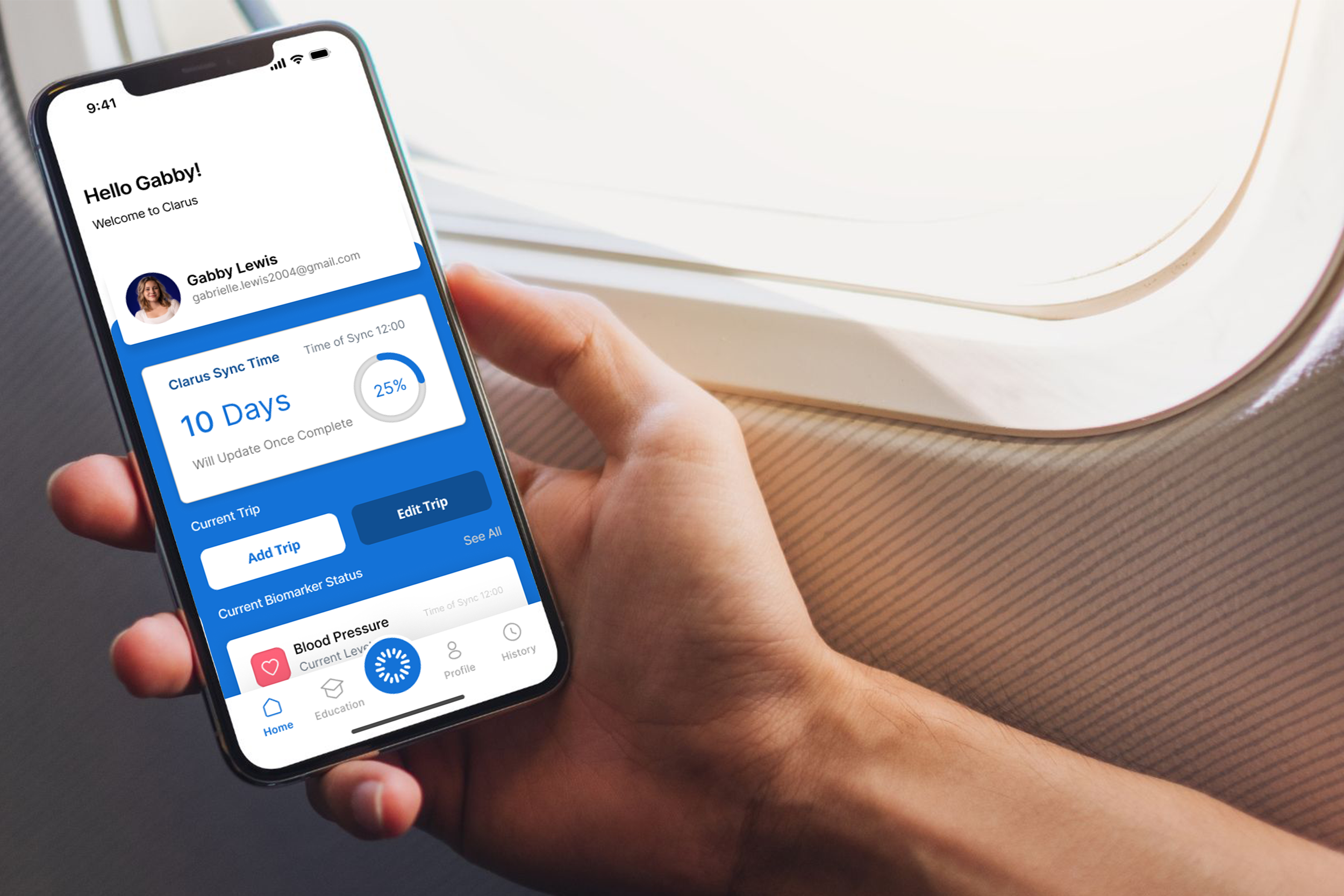
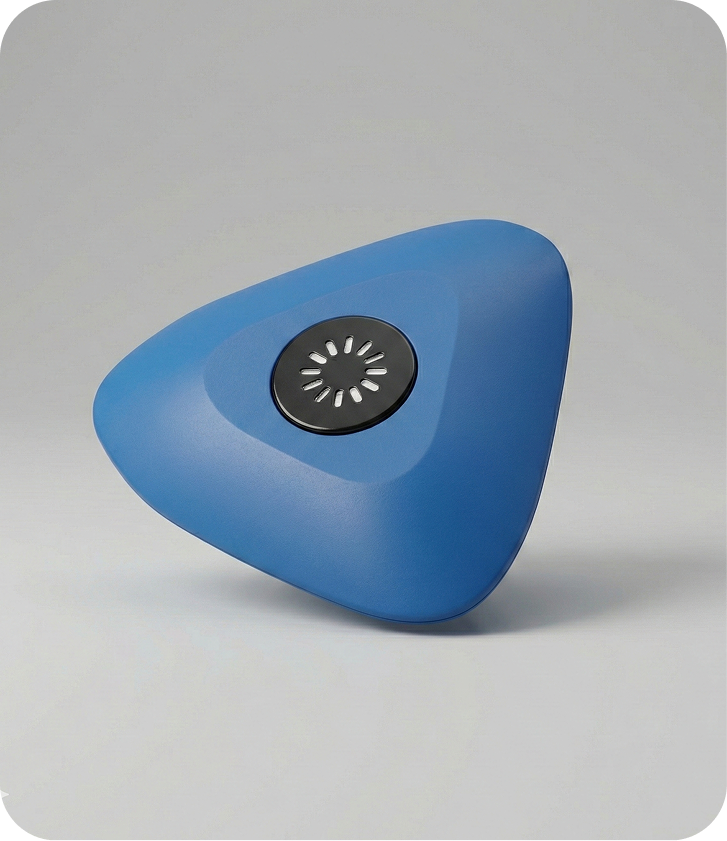
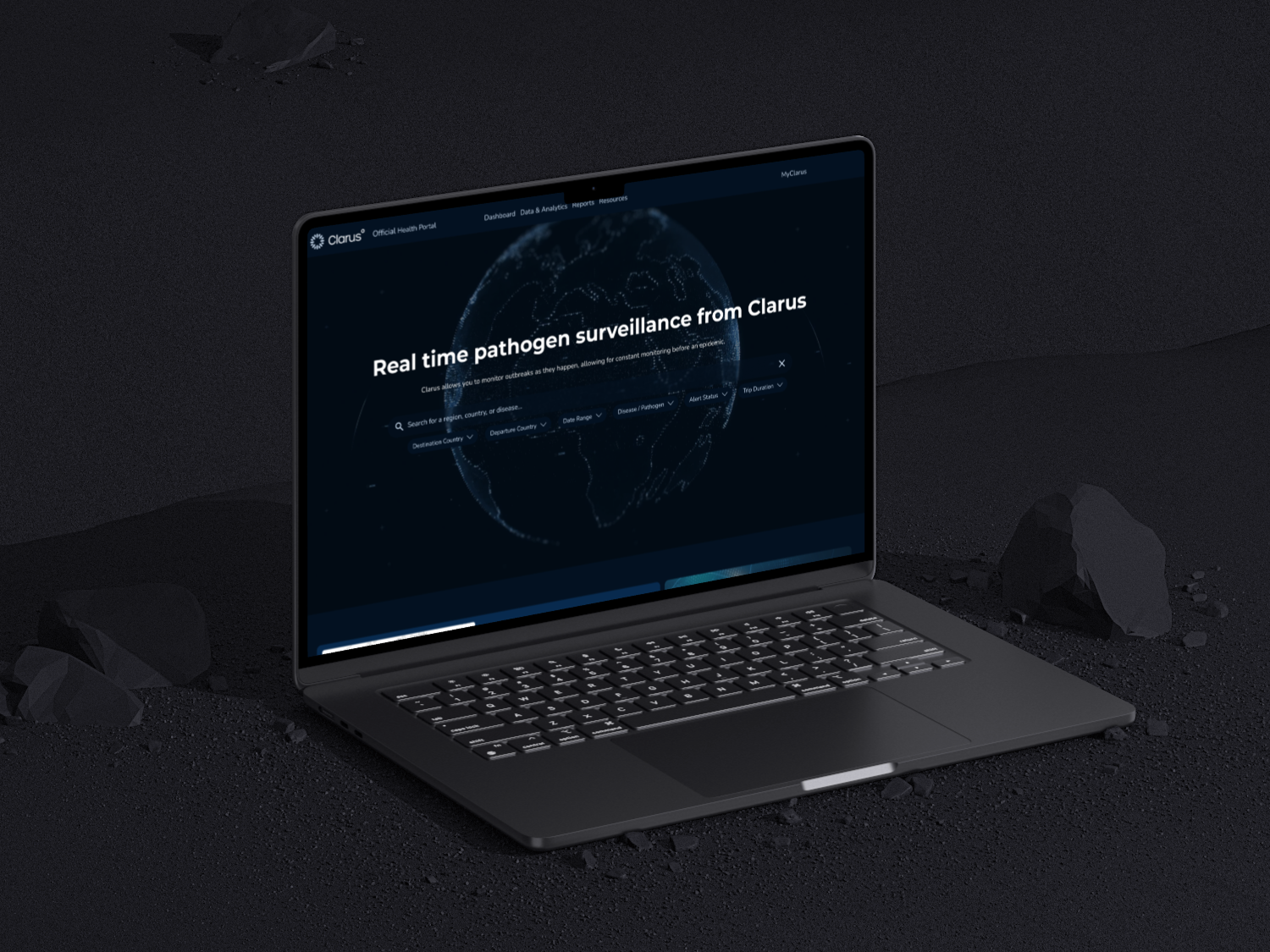
Clarus is a wearable microneedle biosensing system that detects early infection biomarkers and feeds anonymized data into a public health dashboard, helping travelers catch illness sooner and supporting faster outbreak detection worldwide.
If you want to jump to what excites you:
Why
Global travel moves fast, but disease detection is still slow and reactive. Most people don’t know they’re getting sick until symptoms hit, and by then exposure may have already happened.
Background
Current wearables track fitness, not infection risk. Public health systems also rely on delayed reports, creating a gap between personal health data and real time outbreak awareness.
Solution
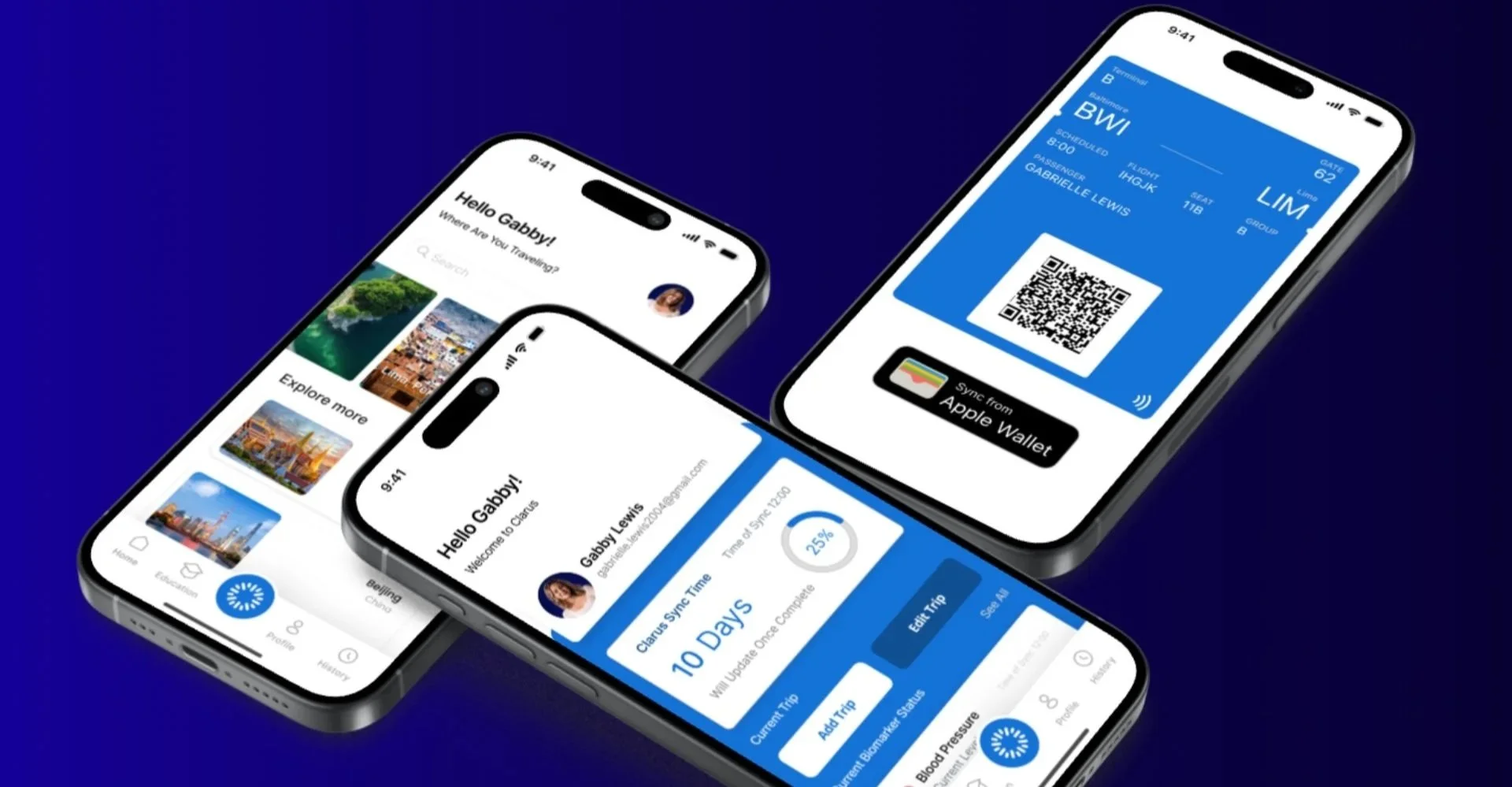
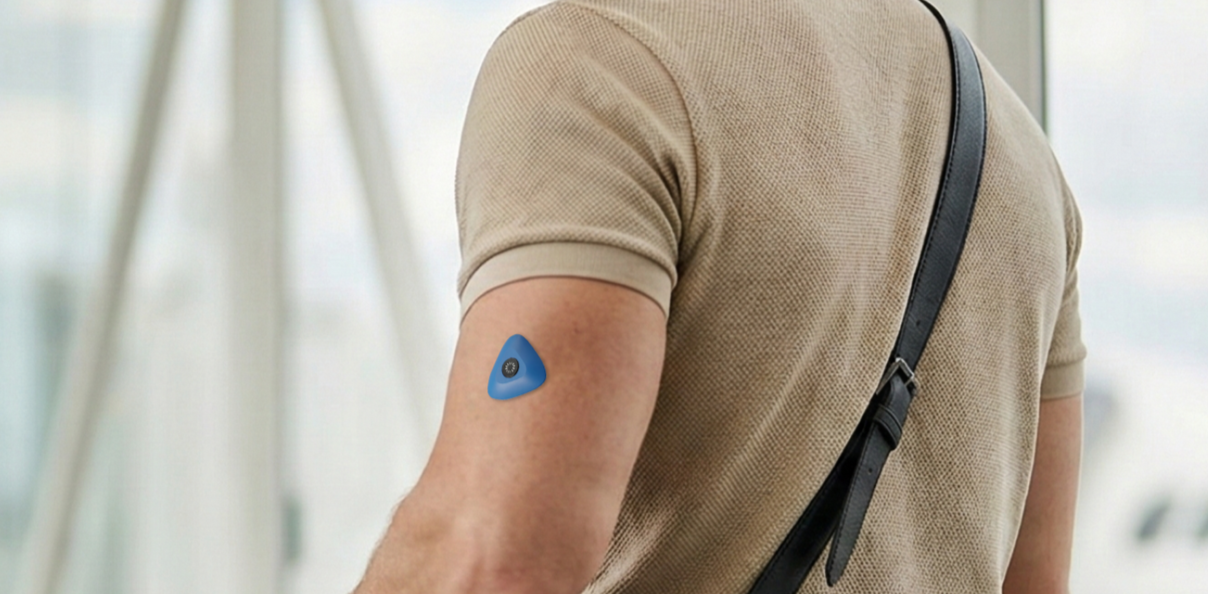
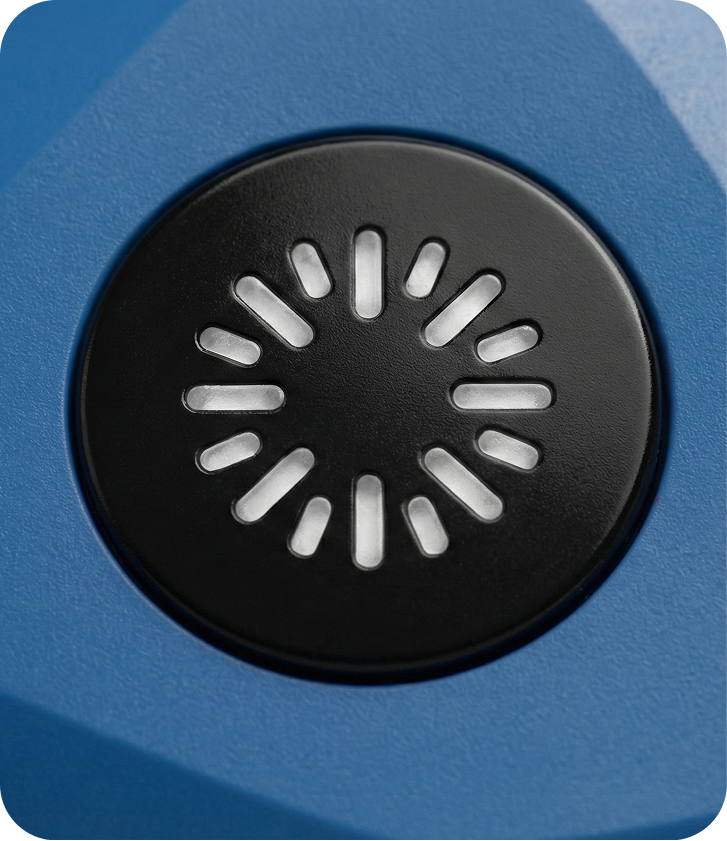
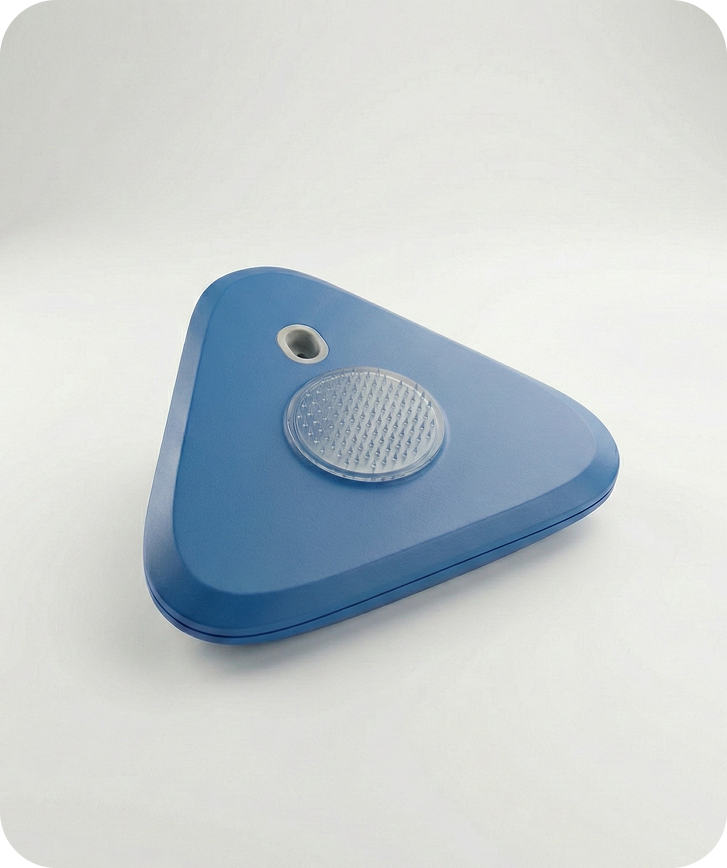
Clarus is a microneedle biosensing patch paired with an app. It tracks early infection biomarkers, alerts travelers sooner, and securely feeds anonymized data into a public health dashboard to support faster outbreak detection.
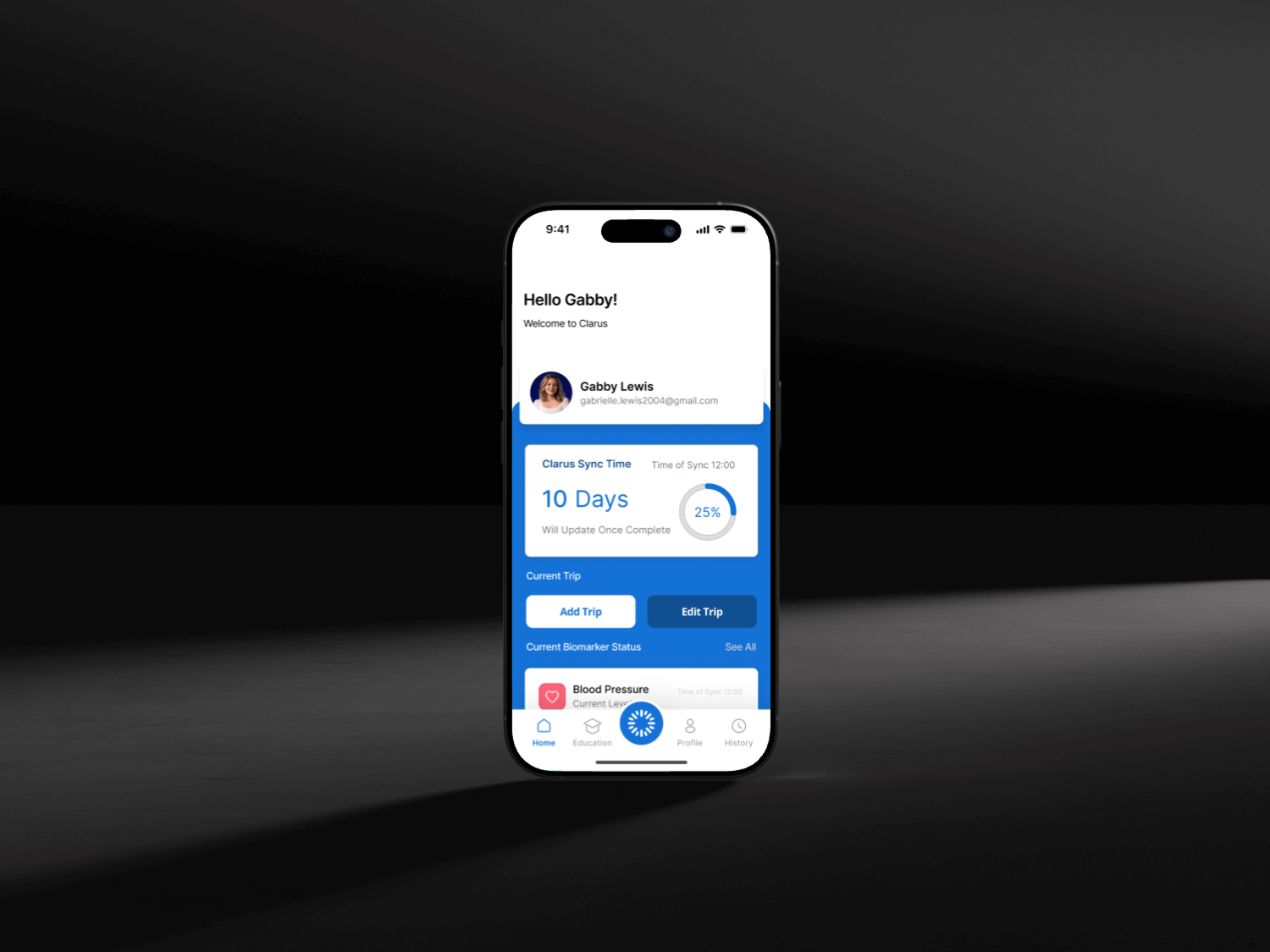
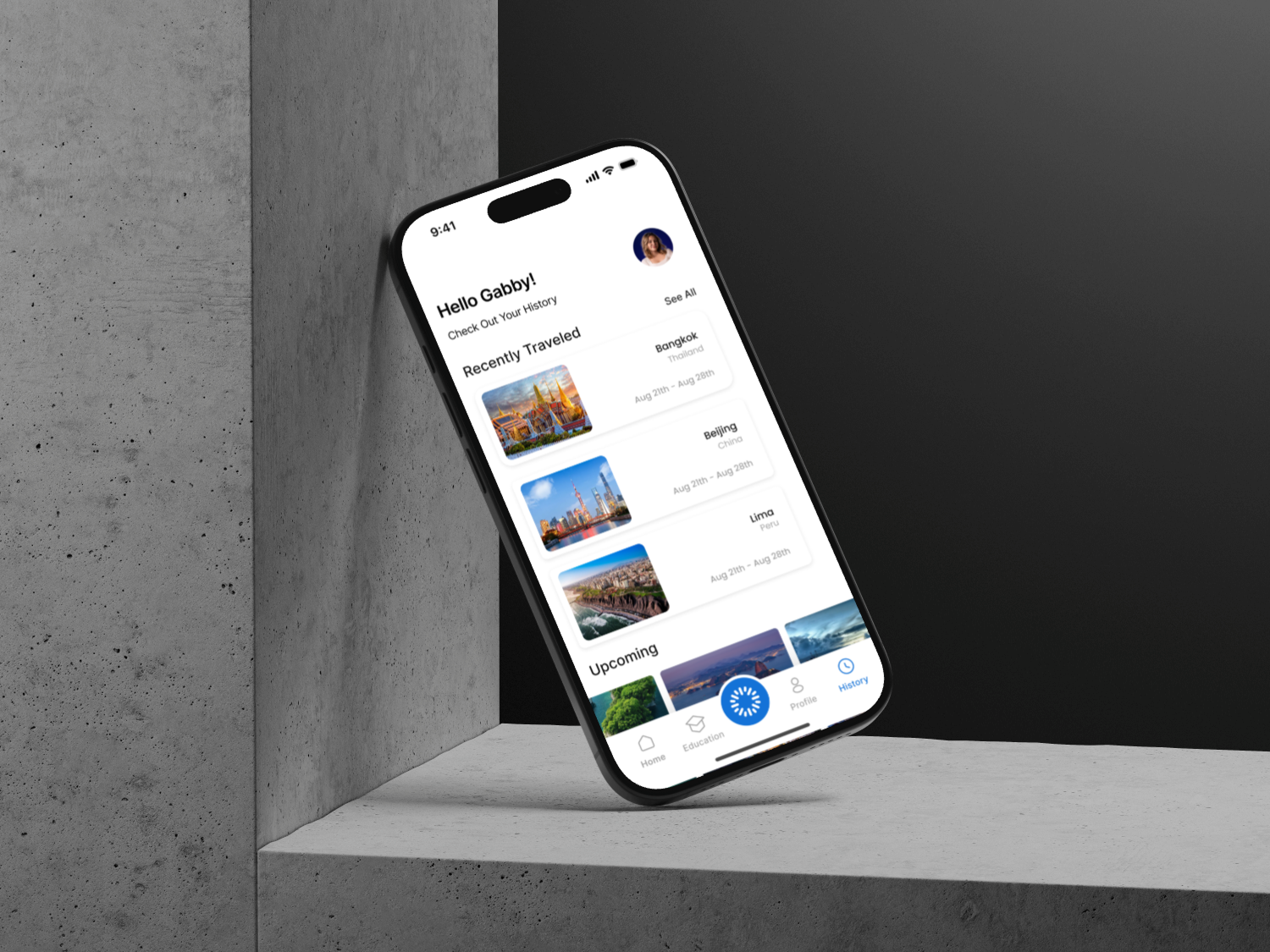
For Clarus, I collaborated on the app’s interface and experience design, focusing on making complex health data feel clear, calm, and easy to act on. I helped shape the structure and visual direction in Figma to ensure an intuitive user flow for travelers.
Role
Project Lead
Industry
Global Health, Travel
Our Deliverables
UI Design, User Research, Prototyping, Usability Testing, Service Mapping
Timeline
Four Months
So What Did We Find?
Lets See…
What Were the Insights?
Early insight builds control
When users received clear early health signals, they felt more prepared and less anxious about potential illness while traveling.
Data needs to be actionable
Users engaged more when biomarker information was translated into simple guidance instead of raw metrics.
Trust increases participation
Transparent privacy messaging made users more comfortable sharing anonymized data for broader public health impact.
What We Did With Those Insights
Using these insights, we refined Clarus to feel less like a data tracker and more like a guided health companion. We simplified how biomarker information is presented, added clearer next steps, and strengthened privacy transparency to build trust and confidence throughout the experience.
Translated complex biomarker data into simple, easy to understand status signals with recommended actions.
Clear Health Status Indicators
Guided Travel Care Pathways
Designed calm, step by step guidance tailored to a traveler’s location and risk level.
Transparent Data Sharing
Clearly explained how anonymized data contributes to the public health dashboard to increase trust and participation.
We Followed a Human Experienced Focused Process that Follows from Research to a Polished Solution.
-
We explored how travelers currently monitor their health and where breakdowns happen. Through interviews and secondary research on global disease reporting, we identified a major gap between early biomarker detection and real time, actionable guidance. We also studied trust patterns around wearable health tech and data sharing.
-
We synthesized findings into key themes: early signals reduce anxiety, users need guided next steps not raw data, and privacy transparency drives participation. From this, we defined Clarus as both a personal health companion and a population level early warning system.
-
We brainstormed ways to translate complex biomarker data into something intuitive and calming. Concepts focused on status based health indicators, travel aware risk levels, and seamless integration between the wearable patch and mobile app.
-
We mapped end to end user journeys from onboarding and trip setup to receiving a health alert and accessing local care resources. The architecture prioritized clarity, minimal friction, and clear escalation pathways when risk levels increased.
-
In Figma, we designed a calm, supportive interface that simplifies complex health data into actionable insights. We prototyped onboarding, dashboard views, alerts, and the public health transparency layer to test clarity and trust, as well as designing the physical patch
-
Through moderated usability testing, we evaluated comprehension of biomarker insights, confidence in recommended actions, and comfort with anonymized data sharing. Feedback led us to simplify language, strengthen guidance, and refine visual hierarchy for faster decision making.
Impact
Clarus increased early health awareness by translating biomarker data into clear, actionable guidance, helping travelers feel prepared instead of reactive while abroad.
overall task completion rate averaged
91%
core health actions like onboarding, trip setup, and checking biomarker status achieved
100% completion
83% of participants successfully completed advanced tasks like syncing the patch, viewing history, accessing settings, and finding support without assistance
AI-GUIDED DECISION SUPPORT
Clarus uses AI to analyze biomarker patterns from the microneedle patch and narrow potential infections based on real time data and travel context. Instead of presenting raw metrics, it translates complex health signals into clear likelihood insights and recommended next steps, turning early detection into simple, actionable guidance.
Our Final Concept
Clarus is a wearable microneedle biosensing system paired with an AI-powered app that detects early infection biomarkers, narrows potential illnesses in real time, and provides clear, actionable guidance while securely contributing anonymized data to a public health dashboard.
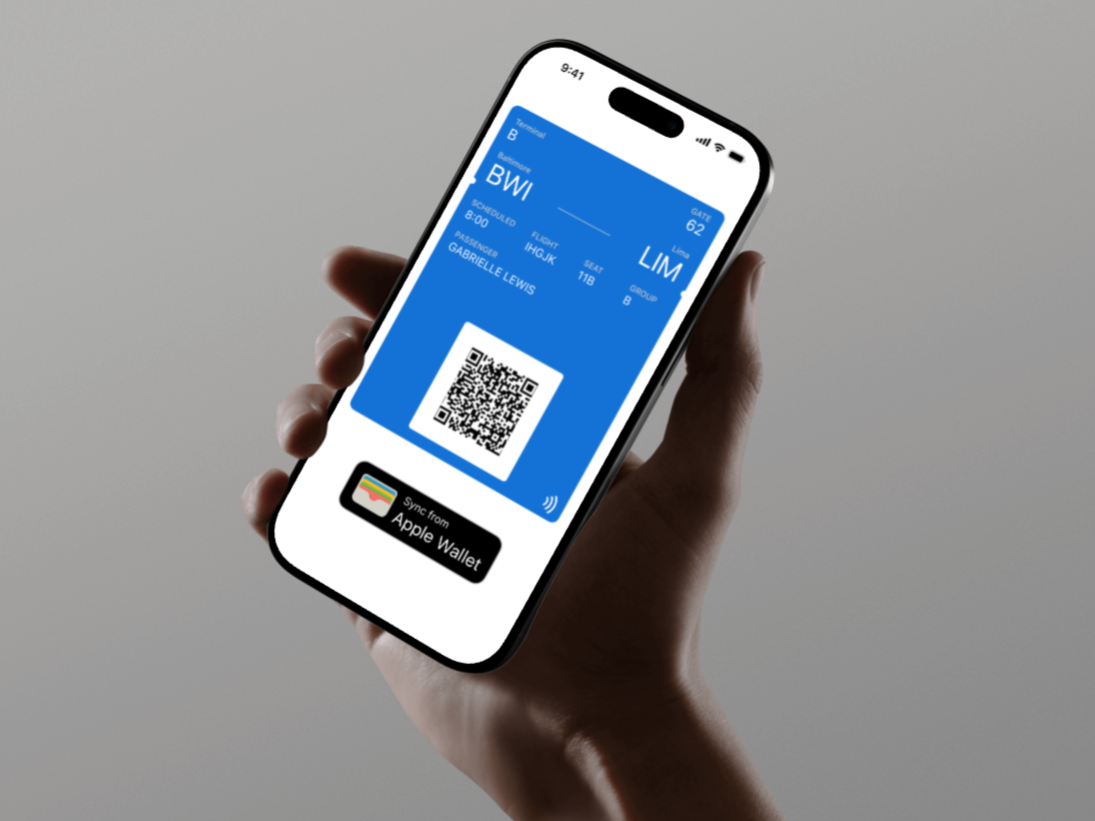
Our Vision Video
Our vision video shows Clarus as a bridge between personal health and global awareness, following a traveler using the microneedle patch, receiving AI guided health insights, and seeing how anonymized data supports faster outbreak detection worldwide.